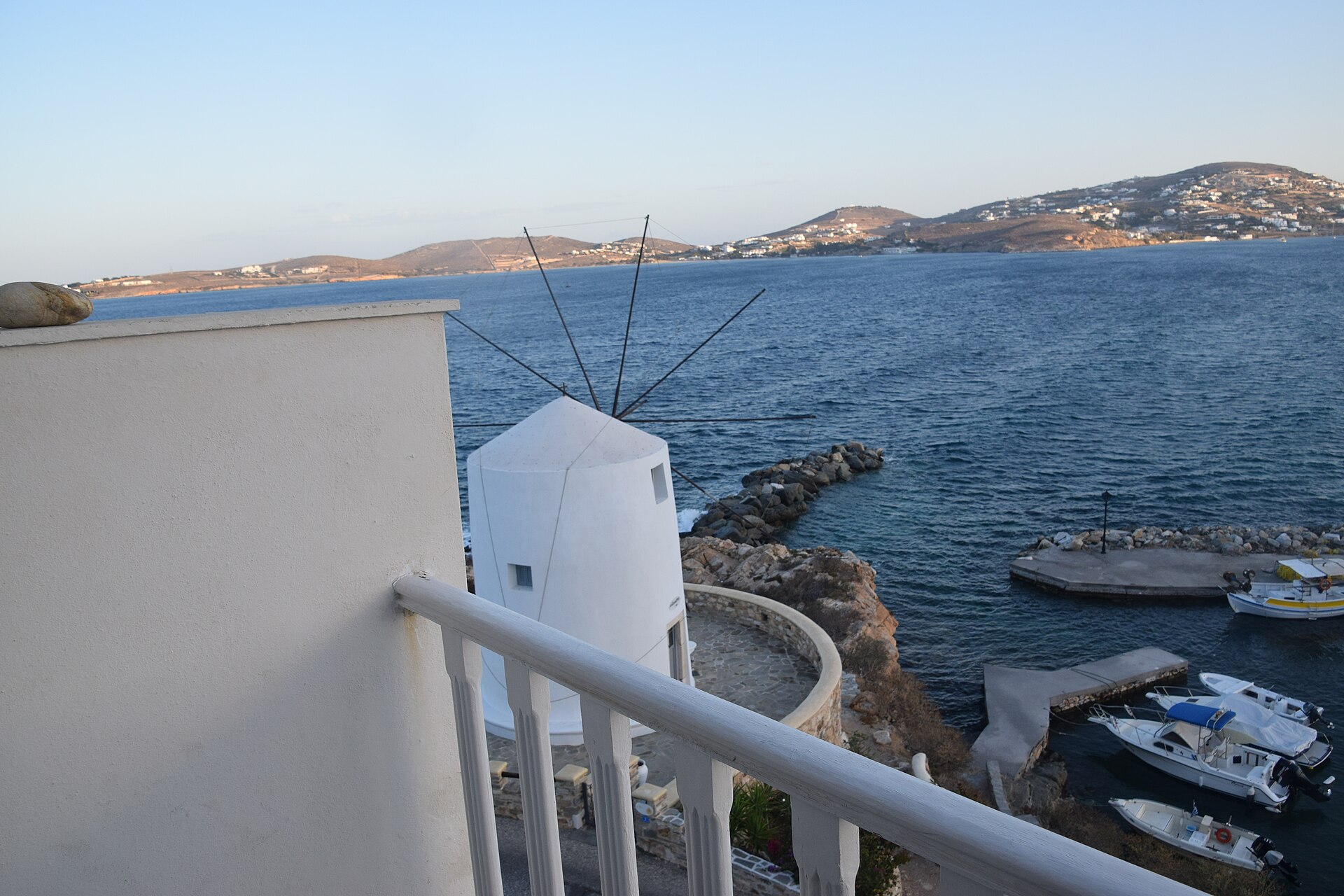
Updated for 2026 Season
The Complete Paros Travel Guide
From marble-white villages to hidden coves, ancient trails to vineyard lunches — everything you need to plan the Paros trip you will talk about for years.
Paros sits in the heart of the Cyclades, equidistant from Athens to the north and Santorini to the south. It is the rare Greek island that manages to be both genuinely authentic and genuinely easy to visit — a place where you can eat in a family taverna overlooking a fishing harbor and still find a direct ferry from Piraeus that gets you there in under four hours.
What sets Paros apart is density of experience. Mykonos has beaches and nightlife. Naxos has mountains and ancient ruins. Paros has both, plus marble-white villages and a food culture serious enough to attract chefs from Athens on their days off. The island has been a center for Greek marble since antiquity, and today hosts a community of artists, ceramicists, and designers alongside the traditional fishing and farming life.
This guide covers everything you need to plan a Paros trip: ferry routes, getting around, where to stay, what to do, and how to find the parts that make the island unforgettable. Routey self-guided tours include interactive maps, curated narratives, and puzzles at the best stops.
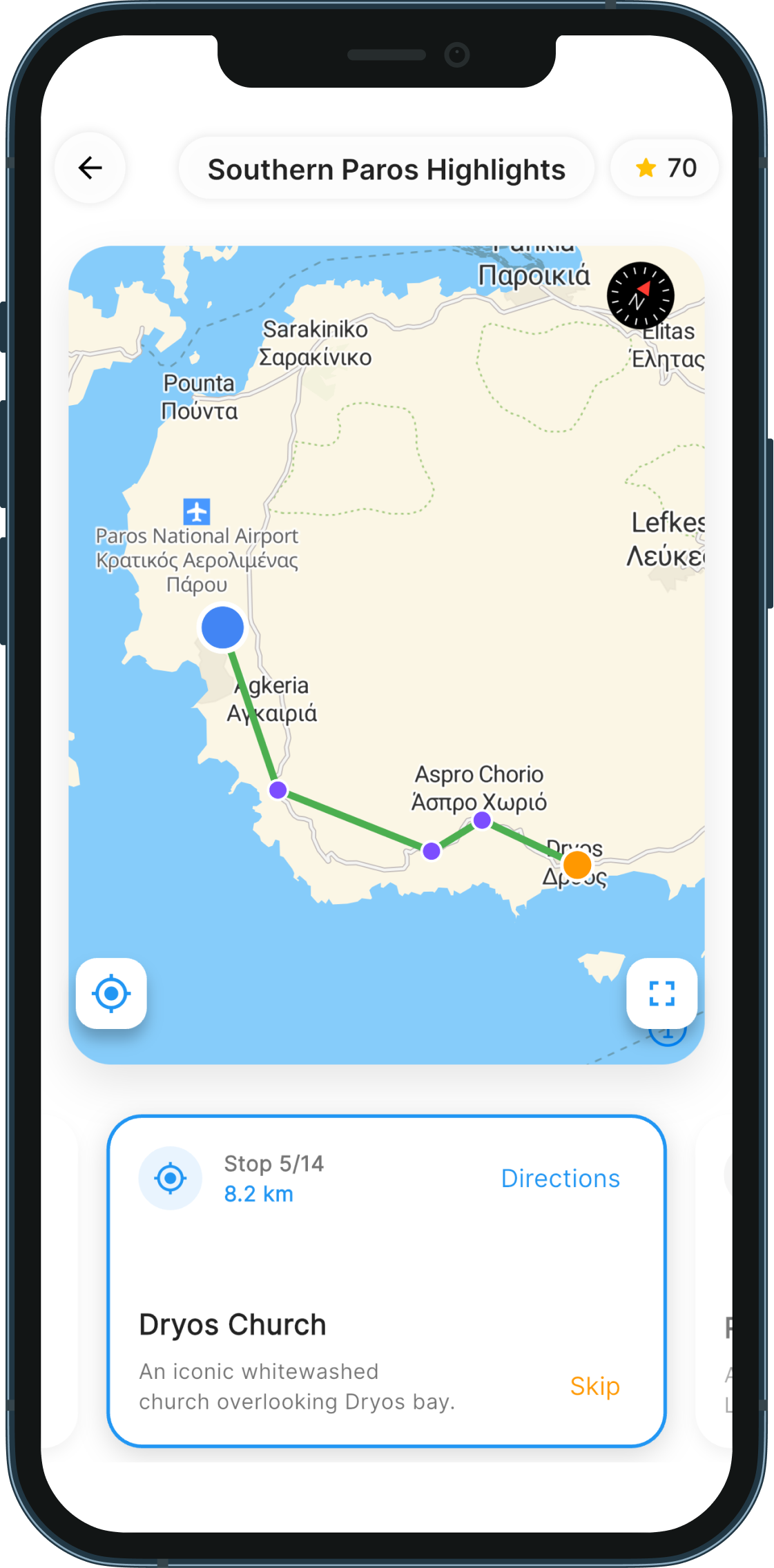
Explore Paros with Routey
Skip the generic Google Maps route. Routey self-guided tours give you a curated, puzzle-driven walk or drive through the island's most interesting areas, with a narrative at every stop.
Getting to Paros
Ferries from Athens (Piraeus & Rafina)
The most common route to Paros is by ferry from Piraeus port (athens main port) or Rafina (closer to Athens airport). High-speed catamarans take 2h45m–4h depending on the vessel. Conventional ferries take 5–7 hours but are more stable in rough sea and significantly cheaper.
Piraeus → Paros
High-speed: 2h45m–3h30m | Conventional: 5–7h
€45–€75 high-speed, €25–€35 conventional
Rafina → Paros
High-speed: 2h30m–3h | Conventional: 4–5h
€40–€65 high-speed, €22–€30 conventional
Book through Ferryhopper or Greek Ferries. Summer ferries book out 2–3 weeks ahead. Book in May for July–August travel.
From Santorini, Naxos & Mykonos
Paros sits at the center of inter-island ferry routes. From Santorini, the crossing takes 1h–3h depending on whether you take a direct catamaran or a route that stops at Ios and Naxos. From Naxos, it is just 40 minutes by high-speed catamaran. From Mykonos, allow 1h–2h30m depending on connections.
The Paros–Antiparos connection is a special case: a small ferry runs every 30 minutes from Pounda beach (southern Paros) to Antiparos town. The crossing takes 8 minutes. €1–€2 per person. There is also a small boat that started operating recently that takes you directly from the port of Parikia to Antiparos, though it's more expensive.
Paros Airport
Paros National Airport (PAS) receives domestic flights from Athens (Eleftherios Venizelos) year-round, with increased summer frequency. The flight takes 35–45 minutes. Tickets are generally €60–€120 one-way. The airport is 12km south of Parikia — a taxi costs around €20–€25.
Getting Around Paros
Car Rental
Essential for exploring beyond Parikia and Naoussa. Small economy cars start at €40/day in shoulder season, €60–€80/day in July–August. Book through local agencies in Parikia — cheaper than international brokers and no deposit disputes. Avoid the narrow village roads if you are not comfortable with tight turns.
ATV & Scooter
Popular and cheaper (€20–€35/day for an ATV), but the mountain roads are steep and loose gravel is common. Fatal accidents on Greek islands involving scooters are not rare — wear a helmet and do not drive at night on unfamiliar roads.
Bus
KTEL Paros buses connect Parikia with Naoussa (€2), Lefkes (€2.20), Pounda/Antiparos ferry (€2.50), and most south-coast beaches. Routes are limited on weekends and in May/October. Check schedules at the Parikia bus station (directly outside the port in Parikia) — or online on their website.
Taxi
Taxis are scarce on Paros. You can usually find a few parked outside the port but you won't usually find them driving around. If you need one, you should book one in advance. Hotels usually offer that service, you can just ask at the front desk. Fixed fares from Parikia: Naoussa €15, Lefkes €12, south coast beaches €18–€25. Rates are set by the municipality — confirm before departing.
Best Time to Visit Paros
Paros has three distinct seasons. The island transforms between them — quiet and local in winter, energetic in peak summer, and unexpectedly pleasant in the shoulder months of May and October.
June – August (Peak Season)
Hot (28–35°C), crowded, lively. This is when Paros is at its most energetic — full beaches, late-night bars, ferries running at maximum frequency. Book accommodation 6–8 weeks ahead. The Meltemi wind keeps the heat bearable but creates choppy seas (ferry cancellations happen). July and August see the most crowds — prices are highest and some beaches feel Mediterranean-photogenic-but-crowded.
May & October (Shoulder Season)
Warm (20–28°C), fewer tourists, lower prices. May has wildflowers across the island and is excellent for outdoor exploration. October has the warmest sea of the year (still 22°C) and the island is genuinely peaceful. October evenings can be cool — bring layers. Many restaurants and tour operators close after mid-October, but establishments in Parikia and Naoussa stay open year-round.
November – March (Off Season)
Quiet, local, and genuinely cheap. Many hotels and restaurants close. Ferries reduce to 2–3 per week. The island feels like a Greek working community rather than a tourist destination — if that is what you want, this is when Paros is most authentic. Winter storms can interrupt ferries for days. Temperatures rarely drop below 8°C.
Where to Stay in Paros
Parikia
The capital and main port. Best for first-time visitors, ferry connections, and budget travelers. The old town is a maze of marble-paved streets with whitewashed cubic houses. The waterfront has dozens of tavernas and bars. Parikia has the widest accommodation range — from €50/night hostels to €150 boutique hotels. Central, walkable, and convenient for everything.
Best for: First visit, ferry access, budget, nightlife
Naoussa
The island's glamorous second town, built around a picture-perfect fishing harbor. Naoussa has the best restaurant and bar scene on the island — this is where Athens weekenders come to eat well and be seen. Accommodation skews upscale (€100–€250/night for good options). The harbor fills with expensive yachts in summer. The old town has charming narrow streets, though prices reflect its popularity.
Best for: Food, romance, upscale stays, atmosphere
Lefkes
The mountain village at the heart of the island. Lefkes is quieter than Parikia and Naoussa, with a more traditional Cycladic character — no harbor, no big hotels, just a small grid of houses on a hillside with a church square and a few excellent tavernas. The Byzantine Museum and the church of Agia Triada are worth an hour of anyone's time. Accommodation is limited and books out in July–August.
Best for: Authenticity, quiet, local food
South Coast (Pounda, Faraggas)
For beach-focused trips, the south coast has the best sand. Pounda is best known for its beach bars and kitesurfing schools. Faraggas has some of the clearest water on the island. Accommodation is mostly studios and small hotels. The trade-off is that restaurants and shops are limited — you eat where you stay or take a short drive.
Best for: Beach life, kitesurfing, relaxation
Things to Do in Paros
More variety per square kilometer than almost any other Cycladic island. Here is how to make the most of it.
Best Beaches in Paros
Paros has over 30 beaches. Most face west or south, meaning they get the famous Aegean sunsets. The north and east coasts are quieter but harder to reach. Most organized beaches have sunbeds and umbrellas (€8–€15 per set), while remote coves are completely free.
Kolympithres
Massive granite rock formations create natural pools and channels — one of the most photographed beaches in the Cyclades. South-facing, so it catches the afternoon sun. Gets busy in July–August. Beach bar on-site. Kitesurfing taught here in the mornings.
Faraggas
Long sandy sweep on the south coast with crystal-clear water. The beach narrows considerably in summer due to low water levels — arrive before 10am in July–August. One excellent taverna at the eastern end. Quieter than Kolympithres.
Santa Maria
North coast, 5km from Parikia. Surf school here (lessons €40–€60) and a beach bar with excellent cocktails. The beach is partly sandy, partly rocky — bring water shoes if you are particular. Open sea, so it gets bigger waves than the south coast.
Pounda
The Antiparos ferry port doubles as a lively beach. Kitesurfing school, beach bars, and a DJ scene on weekends. Not the most peaceful, but the water is spectacular and the ferry to Antiparos is 8 minutes away. Good for active travelers who want social atmosphere.
Agios Fokas
Southeast coast, quiet and local. Shallow water extends far out — great for families with small children. One excellent taverna right on the beach (open summer only). No organized sunbeds, just your towel and sea. Best visited in the morning before the afternoon Meltemi picks up.
Marchello (Marcelo)
Small cove west of Parikia, walking distance from town. Rocky seafloor with some sand patches. Very popular with Greek families on weekends. Shade from the cliff on the eastern side in the afternoon. Local secret — few tourists know about it despite being so close to Parikia.
Kalavros
Long stretch on the southeast coast near Aiyronas. Wind and kitesurfing conditions attract an athletic crowd. Cheaper beach bars than the south coast. The nearby islet of Kalavros is a protected nature reserve with nesting seabirds.
Villages Worth Exploring
Parikia Old Town
The original Cycladic town plan — a tight maze of narrow streets designed to confuse pirates. Today it is one of the most atmospheric old towns in the Cyclades. Every turn reveals a whitewashed doorway, a cascading bougainvillea, or a small church with a blue dome. Do not miss the market street (Ethnikis Antistaseos) for local products, and the evening promenade along the waterfront.
Naoussa Harbor
A working fishing harbor surrounded by outstanding seafood restaurants. The boats leave early morning and return by mid-afternoon — if you eat at a harbor taverna at 6pm, you are eating yesterday's catch. The narrow streets behind the harbor are great for evening walks, with small galleries and designer shops tucked between the bars.
Lefkes
The only mountain village in the traditional Cycladic style on Paros — most were built at sea level. This is because Lefkes was the capital during the Byzantine period. The church of Agia Triada at the village center is worth stepping inside for its 17th-century frescoes. The square has two excellent tavernas (To Kati Allo and Stou Stratouou) that serve local dishes.
Marmara & Prodromos
Two small mountain villages south of Lefkes, connected by a beautiful path through the valley. Marmara has a small church with distinctive blue windows. Prodromos has one of the oldest remaining windmills on Paros, restored and open to visitors. Both are off the tourist track — genuinely local experience.
Cultural Sites & Museums
Panagia Ekatontapiliani
The "Church of 100 Doors" in Parikia — one of the oldest intact Christian churches in Greece, dating to 326 AD (traditionally founded by Emperor Constantine's mother Helena). The outer church is Byzantine; inside is a small 5th-century chapel still used for worship. Open daily, free entry. Arrive early morning to experience it in silence.
Venetian Castle (Kastro)
The crumbling 13th-century Frankish castle at the north edge of Parikia. Built by the Venetian ruler Marco Sanudo, it offers sweeping views of Parikia and the Aegean. Best explored at golden hour. Free, always open. The streets leading to it are some of the most photogenic in Parikia.
Byzantine Museum (Lefkes)
A small museum in Lefkes displaying Byzantine icons and religious artifacts recovered from churches across Paros. Unexpectedly rich collection for such a small space. The building itself is a restored 17th-century olive press. €3 entry.
Marble & Traditional Crafts Workshop
Paros marble has been used in monuments from the Acropolis to Napoleon's tomb. A small workshop near Parikia demonstrates traditional marble carving — visitors can try it. This is one of the more unusual things to do on the island and is particularly good for families. Book through your accommodation or the Paros tourism office.
Folklore Museum (Naoussa)
In a 19th-century captain's house in Naoussa old town. Displays traditional Cycladic domestic objects, costumes, and tools. Gives a real sense of how the island lived before tourism. €2 entry, open afternoons May–October.
Day Trips from Paros
Antiparos
Eight minutes by ferry from Pounda. The island has a charming main town with a car-free center, excellent seafood restaurants, and the famous Antiparos Cave (a vast cavern with 85m depth open to visitors, €10). The cave was used as a shelter by pirates, resistance fighters, and monks at different points in history. Renting a golf cart (€30–€50/day) is the traditional Antiparos way.
Naxos
Forty minutes by catamaran. Naxos is the largest Cycladic island and has dramatic mountain scenery, ancient temples, and excellent local produce (Naxos potatoes are famous throughout Greece). The Apollonas beach on the north coast has a 10m ancient kouros statue left abandoned in the quarry where it was carved. Doable as a long day trip but better as an overnight.
Mykonos (Half Day)
One hour by catamaran. Mykonos is worth a half-day visit to see the iconic windmills, Little Venice, and the old town — then leave before the nightlife crowds arrive. Ferry connections are frequent in summer (3-5 per day). Do not try to do Mykonos and Paros in one day — it is too rushed and you will not enjoy either.
Delos (Organized Tour)
Delos is the sacred mythological birthplace of Apollo and one of the most important archaeological sites in Greece. It is a 1.5-hour ferry from Paros (via Mykonos), and most visitors go on an organized day tour from Parikia (€80–€120 including ferry, guide, and entrance). Independent visits require more planning — the ferry is seasonal and Delos has limited visitor facilities.
Water Sports & Activities
Paros is one of the best kitesurfing destinations in the Mediterranean. The Meltemi wind picks up consistently from May through September, creating perfect conditions in the afternoon. Santa Maria and Pounda are the main kitesurfing beaches, with schools offering lessons (2-hour beginner course €80–€120) and equipment rental.
Beyond kitesurfing, Paros has diving schools (wreck dives, reef dives, night dives — €60–€90 per dive), boat rentals (with or without license from €150/day), and sea kayaking along the south coast. A popular activity is the boat day trip from Parikia — visiting three different coves, swimming at Antiparos, and lunch on a remote beach. These run €60–€90 per person and can be booked at the Parikia harbor.
Food & Drink in Paros
Paros punches well above its weight on food. The island has a strong agricultural tradition — the valleys around Lefkes grow olives, grapes, and vegetables — and a food culture that takes eating seriously. Here are the experiences not to miss.
Local Dishes to Try
- Psari fournou — Oven-baked fish, typically grouper or snapper, with potatoes, tomatoes, and herbs. A staple of harbor tavernas. Ask what is fresh that day.
- Kolokithokeftedes — Zucchini fritters with mint and feta. Found on almost every menu. Best at seaside tavernas.
- Paros graviera — The local cheese. A mild, nutty hard cheese similar to gruyère, made on the island. €5 for a portion at a taverna.
- Sychato — The local wine. A dry white wine from Paros vineyards, often served chilled. Significantly better than most tourist-island plonk.
- Loukoumades — Greek doughnuts with honey and cinnamon. End of meal must-order. Found everywhere.
Best Tavernas by Area
- Parikia waterfront — To Tsakonikon (grilled meats), Stis Pareas (seafood, upscale)
- Naoussa harbor — Maro (local favorite, booking essential), Empvorix (creative Greek, expensive)
- Lefkes square — Stou Stratou (reliable traditional), To Kati Allo (excellent mezedes)
- Remote beach tavernas — Petalides (Marpissa valley, legendary), Siparos (Faraggas beach, great fish)
How Routey Enhances Your Paros Trip
Routey turns the act of exploring into an interactive adventure. Instead of following a generic Google Maps route, you follow a curated, puzzle-driven walk or drive through Paros' most interesting areas, with a narrative at each stop and a game layer on top.
Each Routey tour includes a curated route through the island's highlights, a short narrative at each stop, riddles and puzzles that award bonus points for correct answers, offline maps, and a leaderboard. Tours take 2–5 hours depending on the route.
Frequently Asked Questions
How many days do I need in Paros?
Three to five days is ideal for Paros. This gives you enough time to explore the main villages, visit several beaches, do a day trip to Antiparos, and still have a relaxed day or two. If you are only visiting from a Santorini or Athens day trip, you will see the highlights but miss the island rhythm that makes Paros special.
Is Paros better than Mykonos?
It depends on what you want. Mykonos is louder, more expensive, and better for nightlife. Paros is more authentic, affordable, and better for outdoor activities, food, and cultural exploration. Many travelers who have been to both say Paros feels like the Greece they came for — before it became a brand.
Is Paros good for families?
Paros is one of the most family-friendly Cycladic islands. The villages of Parikia and Naoussa have flat, pedestrian-friendly streets. Most beaches have shallow, calm water. The island is small enough that kids can handle the distances, and there are enough activities — boat trips, marble workshops, village walks — to keep them engaged without constant screen time.
How much does a Paros trip cost?
A mid-range Paros trip costs €80–€150 per person per day including accommodation, food, and transport. Ferry from Athens starts at €35–€45. A car rental is €40–€70 per day. Accommodation in Parikia starts at €60/night, while Naoussa upscale options run €120+. Using Routey self-guided tours at current web pricing is one of the most affordable activity options on the island.
Can you do Paros without a car?
Yes, but it limits you. Paros has a decent bus network connecting Parikia, Naoussa, and most beaches, but schedules are infrequent in the shoulder season. Many of the best beaches and villages are inaccessible by bus. Renting a car or ATV is strongly recommended if you want to explore beyond the main tourist areas. Taxis are scarce and expensive.
Still have questions?
Our team responds within 24 hours. Whether you need help choosing a tour or have a question about your Paros trip.
Contact RouteyLast updated April 2026. Ferry schedules, restaurant hours, and accommodation prices may vary seasonally. Always confirm before traveling.